Fair trade. Strong farmers. Sustainable income
Latek’s Agribusiness Enterprise (LABE) supports farmers by providing them with a reliable and fair sales market.

What is LABE?
Latek’s Agribusiness Enterprise (LABE) is a social business in Uganda that offers smallholder farmers a fair and reliable market for their maize. LABE buys maize at a premium price, processes it into high-quality maize flour and maize bran (animal feed) and sells these products to schools, merchants and other customers, mainly in the capital Kampala.
As in a cooperative, a part of the profits from the processing of the maize of the farmers is returned to them, so that they benefit twice:
- Preferred price for selling their grain
- Profit sharing when LABE works profitably
Why LABE is important
Many small farmers in Uganda do not have a reliable sales market and sell at very low prices during the harvest. LABE solves this problem:
✔ Preferential price: Premium of +50 UGX/kg over market price
✔ Reliable customer who buys every year
✔ Stable, long-term relationships between farmers, Latek and LABE
✔ Economic participation of farmers through profit distribution
✔ and rural development
What LABE does
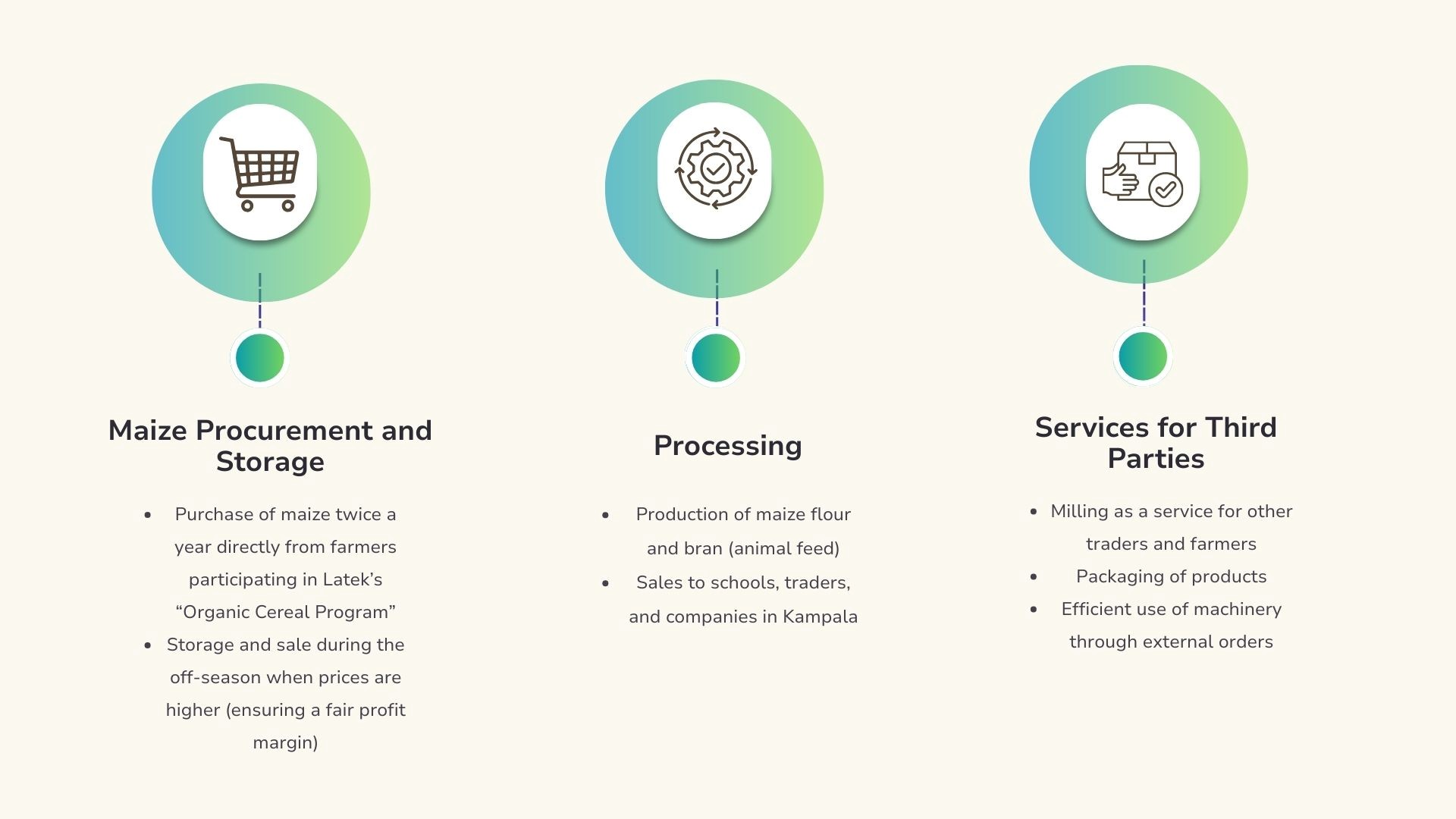
LABE operates along the entire maize value chain:
How LABE Improves the Lives of Farmers
For many small farmers in Uganda, the sale of their maize is uncertain. Prices fluctuate, middlemen pay poorly and often there is hardly anything left to live.
LABE fundamentally changes that:
- Fair prices from the beginning: LABE consciously pays more than the market: an incentive for good quality and a safe source of income.
- Income that is predictable: Because LABE buys regularly, farmers can better plan their cultivation and reduce risks.
- Reduction of post-harvest losses by reliable off-taking of maize harvest
- More money at the end of the year: Through profit sharing, they benefit not only in the sale, but also in the economic success of the company.
- Stronger structures in the village: cooperatives and trainings give farmers more knowledge, influence and future prospects.
This creates a cycle that strengthens income – sustainably and dignified.